
Ismoili Somoni Monument & Dusti Square Guide — Dushanbe's Symbolic Heart
- 0 comments
- 5 hours ago
- Architecture & Landmarks, Dushanbe
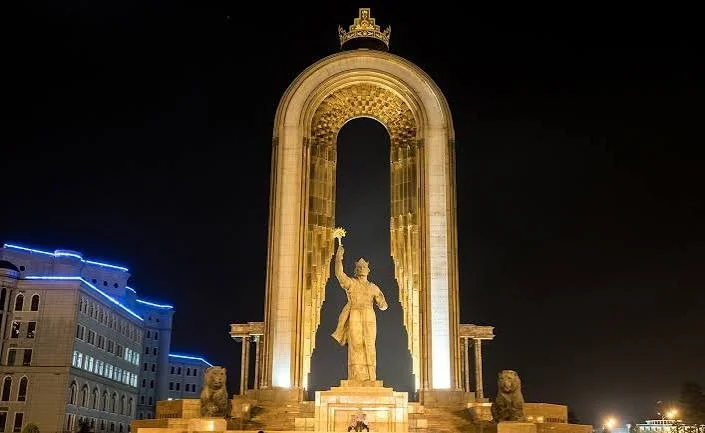
Introduction to Dusti Square and Ismoili Somoni
Located along central Rudaki Avenue (Khiyoboni Rudaki / Хиёбони Рӯдакӣ), Dusti Square (Maydoni Dusti / Майдони Дӯстӣ — Friendship Square) serves as the civic and symbolic heart of Tajikistan’s capital. The plaza is dominated by the monumental Ismoili Somoni Complex (Маҷмааи Исмоили Сомонӣ), dedicated to Abu Ibrahim Ismail ibn Ahmad (Ismoili Somoni), the legendary founder of the 9th–10th century Samanid Empire (Sulolai Somoniyon / Сулолаи Сомониён).
Unveiled in 1999 to commemorate the 1100th anniversary of the Samanid State, the complex stands as an enduring symbol of Tajik national identity, sovereignty, and statehood.
Architectural Marvels of the Complex
The monument rises dramatically above the marble plaza, combining classical Persian motifs with modern monumental sculpture:
- The Arch and Golden Crown (Toj): A soaring 40-meter-high granite arch forms the backdrop of the complex. The arch is crowned with a massive gold-leaf plated crown (Toj / Тоҷ) and a halo of seven stars, symbolizing unity, royal heritage, and the historic cultural legacy of the Tajik nation.
- The Bronze Statue of Ismoil Somoni: At the center of the arch stands a 13-meter bronze statue of Soh Ismoili Somoni. Draped in traditional royal robes and holding a golden scepter, the posture conveys strength, wisdom, and governance.
- The Bronze Lions (Sherho / Шерҳо): Flanking the steps leading to the pedestal are two bronze guardian lions (sherho), symbolizing vigilance, protection, and sovereign power.
- Historical Relief Panels: Intricate bronze relief bas-reliefs along the walkways depict pivotal moments in Samanid history, illustrating achievements in science, literature, architecture, and governance under Samanid rule.
Exploring Around Dusti Square (Maydoni Dusti)
Dusti Square is surrounded by some of Dushanbe’s most prominent architectural landmarks and green spaces:
- Musical Fountains & Strolls (Sayr): In the late afternoon and evening, the wide plazas surrounding the monument feature cascading water fountains that illuminate in vibrant colors, attracting families and travelers taking evening strolls (sayr).
- Proximity to Bogh-i Rudaki: The square transitions directly into Rudaki Park (Боғи Рӯдакӣ), home to shaded avenues, flower beds, and the central statue of the father of Persian poetry, Abu Abdollah Rudaki.
- Civic Landmarks: Framing the plaza are major civic institutions, including government offices, national libraries, and administrative avenues.
Practical Visitor Guide
- Best Time to Visit: Late afternoon to golden hour (17:00–19:30). As night falls, dramatic lighting illuminates the golden arch and crown, making it one of the premier photography spots in Dushanbe.
- Getting There: Located in central Dushanbe on Rudaki Avenue. Easily accessible on foot from major central hotels or via Jura Taxi and city buses/trolleybuses using a City Card.
- Visitor Etiquette: Dusti Square is an active civic space and ceremonial site. Visitors are welcome to walk freely across the marble plaza and take photos; basic respectful behavior applies near the central guard posts.
Quick Facts
| Fact | Detail |
|---|---|
| 👑 Golden Crown (Toj) | 40-meter granite arch topped with a gold-leaf plated crown (Toj) & 7-star halo |
| 🗿 Ismoili Somoni Statue | 13-meter bronze statue of Samanid ruler Soh Ismoili Somoni with golden scepter |
| 🦁 Bronze Lions | Two guardian lions (sherho) flanking the marble steps leading to the Somoni pedestal |
| 📍 Location | Maydoni Dusti (Dusti Square) along central Rudaki Avenue in Dushanbe |
| 🏛️ Samanid Heritage | Unveiled 1999 for the 1100th anniversary of the Samanid Empire (Sulsilai Somoniyon) |
| 🌆 Best Visit Time | 17:00–19:30 (golden hour & evening illuminated musical fountains) |
| 🌳 Nearby Park | Directly connects to Rudaki Park (Bogh-i Rudaki) & central national library avenues |
No results available