
National Museum of Antiquities of Tajikistan — The Sleeping Buddha in Nirvana and Silk Road Archaeology
- 0 comments
- 5 hours ago
- Dushanbe, Museums, Galleries & Exhibitions
Introduction to the Museum of Antiquities
While Dushanbe’s grand modern museums showcase contemporary art and national history, the National Museum of Antiquities of Tajikistan (Осорхонаи миллии отиқаҳои Тоҷикистон) offers an unparalleled journey into Central Asia’s ancient past. Located on Academician Rajabovs Street near the city center, this quiet, scholar-led institution houses the most significant archaeological discoveries unearthed across Tajikistan over the past century.
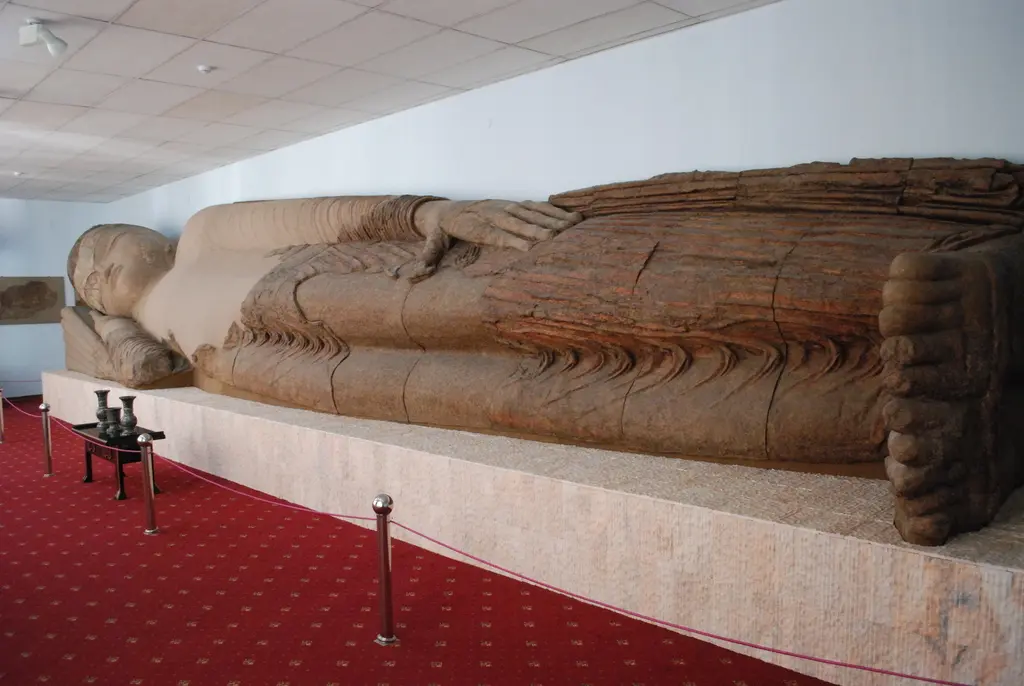
From Bronze Age agricultural tools of Sarazm to Hellenistic Greco-Bactrian temple offerings, the museum preserves priceless Silk Road artifacts. However, its world-famous crown jewel is the monumental 13-meter clay statue of the “Buddha in Nirvana” (Буддо дар нирвана).
The “Buddha in Nirvana” (Buddho dar nirvana): A Silk Road Masterpiece
Stretched serenely across the entire second-floor gallery of the museum, the statue depicts the Buddha reclining on his right side at the moment of achieving ultimate liberation (parinirvana).
Key Historical & Archaeological Facts:
- Discovery at Ajinateppa (Аҷинатеппа): The statue was discovered in 1966 during archaeological excavations led by Soviet scholar Boris Litvinsky at the 7th–8th century Buddhist monastery complex of Ajinateppa, located in the Vakhsh River valley near modern Bokhtar (Khatlon Province).
- Monumental Clay Sculpture: Crafted entirely from local clay and river mud, the statue weighs over 6 tons and measures 13 meters (nearly 43 feet) in length, making it the largest pre-Islamic clay Buddha statue preserved in Central Asia.
- Salvage and Restoration: Found fragmented into dozens of pieces following ancient fires, the statue was carefully excavated, documented, and transported in sections. Experts from the Hermitage Museum spent decades preserving and reassembling the clay structure before it was installed in its dedicated hall in Dushanbe.
Other Unmissable Silk Road Treasures in the Museum
Beyond the reclining Buddha, the museum’s galleries preserve several cornerstone archaeological collections from across Tajikistan:
- The Temple of Oxus (Takht-i Sangin / Тахти Сангин): Exceptional Greco-Bactrian artifacts from the 4th to 2nd century BCE temple sanctuary at the confluence of the Vakhsh and Panj rivers, including ivory dagger scabbards, bronze statuettes, and Hellenistic ceremonial altars.
- Wall Paintings of Ancient Penjakent (Panjakent-i Qadim): Vibrant 7th–8th century Sogdian frescoes depicting epic battles, banquets, mythological deities, and daily life along the Silk Road before the Arab conquests.
- UNESCO World Heritage Sarazm (Саразм): Artifacts from the 5,500-year-old Eneolithic and Bronze Age settlement near Panjakent, including bronze jewelry, ceremonial pottery, and the famous grave goods of the “Princess of Sarazm.”
- Isfara & Khuttal Artifacts: Medieval Islamic ceramics, carved wooden beams, and numismatic collections charting early regional dynasties.
Practical Visitor Guide
- Location & Access: Situated at 15 Academician Rajabovs Street, Dushanbe (within walking distance from central Rudaki Avenue and Central Park). Easily reached via Jura Taxi or local city transport.
- Guided Tours: Hiring a local museum guide at the entrance is highly recommended. The resident scholars provide deep historical context for the Ajinateppa and Sogdian collections.
- Photography Ethics: Flash photography is strictly prohibited in the Buddha hall and Sogdian fresco rooms to protect delicate ancient pigments and clay structures.
Quick Facts
| Fact | Detail |
|---|---|
| 🗿 Sleeping Buddha | 13-meter (43 ft), 6-ton clay statue of Buddha in Nirvana (7th–8th century Ajinateppa) |
| 📍 Museum Location | 15 Academician Rajabovs Street, Dushanbe (near Rudaki Ave & Central Park) |
| 🏺 Temple of Oxus | Takht-i Sangin Greco-Bactrian artifacts (4th–2nd century BCE) from Vakhsh & Panj rivers |
| 🎨 Sogdian Frescoes | 7th–8th century wall paintings of Ancient Penjakent depicting Silk Road battles & banquets |
| 👑 Princess of Sarazm | 5,500-year-old UNESCO Sarazm grave goods, bronze jewelry & Eneolithic ceramics |
| 🏛️ Restoration | Excavated by Boris Litvinsky in 1966; restored over decades by Hermitage Museum experts |
| 🚫 Photo Rules | Flash photography strictly prohibited in Buddha hall & Sogdian fresco rooms |
No results available