
Tajik Woodcarving (Kandakorī) & Gaj Plaster Art Heritage — Decorative Architectural Traditions of Istaravshan, Isfara, and Kokhi Navruz
- 0 comments
- 5 hours ago
- Archaeological Sites, Architecture & Landmarks, Crafts & Heritage
Introduction to Tajik Decorative Arts
Central Asian architecture is renowned for its harmonious fusion of structural engineering and delicate interior decoration. In Tajikistan, two ancient artistic disciplines represent the pinnacle of traditional craftsmanship: Kandakorī (Кандакорӣ — ornamental woodcarving) and Gajkorī (Гаҷкорӣ — intricate carved plaster art).
For centuries, master artisans (usto / усто) passed down these specialized techniques through the strict mentor-apprentice system (ustod-shogird). Today, these traditional arts adorn historical mausoleums, traditional teahouses (choykhona), rural covered porches (ayvon), and magnificent modern architectural monuments across Tajikistan.
The Art of Woodcarving (Kandakorī)
Woodcarving (kandakorī) is one of Tajikistan’s oldest surviving applied arts, flourishing particularly in northern artisan hubs like Istaravshan, Isfara, and the Zarafshon Valley (Panjakent):
- Selection of Local Woods: Master woodcarvers select dense, durable local hardwoods that age gracefully without warping—primarily walnut (chormaghz / чормағз), oriental plane tree (chinor / чинор), and seasoned apricot wood (zardolū / зардолу).
- Mastery of Geometric & Floral Motifs: Kandakorī patterns are categorized into two primary decorative styles:
- Islimī (Ислимӣ): Flowing, organic floral and botanical vines symbolizing nature and eternal life.
- Girih / Gireh (Гиреҳ): Mathematically precise geometric interlaces, multi-pointed star configurations, and complex polygon webs.
- Architectural Applications: Woodcarving is most prominently displayed on slender carved pillars supporting open-air porches (ayvon), heavy entrance doors (darvoza), window frames, and decorative wooden furniture.
The Elegance of Carved Plaster Art (Gajkorī)
Alongside woodcarving, Gajkorī (Гаҷкорӣ) is the delicate art of sculpting intricate low-relief patterns into quick-drying plaster (gaj / гаҷ):
- The Crafting Process: Master plasterers mix natural gypsum (gaj) with water to create a pliable plaster surface. While the layer remains moist, artisans use sharp steel chisels (morkash) to carve deep geometric lace patterns into the plaster by hand.
- Mirror Inlay (Oina-bandī / Ойнабандӣ): In grand ceremonial halls, carved gaj frames are lined with thousands of tiny hand-cut mirror fragments (oina-bandī), creating dazzling reflections under indoor chandeliers.
- Ceiling Painting (Naqqoshī / Наққошӣ): Carved plaster borders often frame richly painted wooden ceilings (naqqoshī), where vibrant red, cobalt blue, and gold-leaf botanical patterns decorate overhead beam structures.
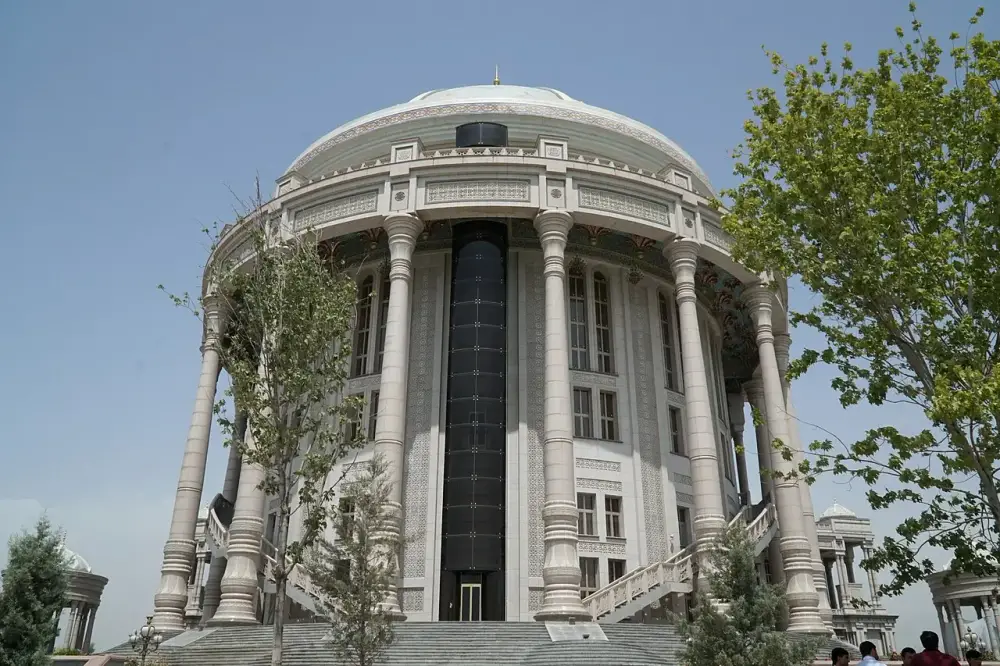
Kokhi Navruz: The Modern Cathedral of Tajik Craftsmanship
To witness the ultimate contemporary synthesis of kandakorī, gajkorī, and ceiling painting (naqqoshī) in a single location, visitors to Dushanbe must explore Kokhi Navruz (Кохи Наврӯз — Navruz Palace).
Constructed over several years by hundreds of Tajikistan’s top master artisans (usto), Kokhi Navruz contains twelve grand ceremonial halls, each showcasing a distinct regional craftsmanship style:
- Arghavan Hall: Famous for its breathtaking carved red wood (kandakorī) walls and ceilings inlaid with semi-precious stones.
- Guliston Hall: Features over 6,000 square meters of hand-carved alabaster plaster (gajkorī), crafted by master artisans from Isfara and Dushanbe.
- Didor Hall: Celebrated for its hand-painted ceilings (naqqoshī) and inlaid wooden flooring depicting classical Silk Road motifs.
Where to Experience Traditional Craftsmanship in Tajikistan
- Istaravshan Artisan Workshops: Stroll through the historic quarter (guzar) of Istaravshan to visit active woodcarving studios and watch usto woodcarvers chiseling pillars by hand.
- Isfara Craft Centers: Known as northern Tajikistan’s primary center for both gajkorī plaster sculpture and woodcarving.
- Traditional Teahouses (Choykhona): Visit iconic teahouses such as the Choykhona Dushanbe or the Choykhona Isfara to sip hot green tea under intricately carved wooden ceilings.
Quick Facts
| Fact | Detail |
|---|---|
| 🪵 Kandakorī | Ornamental woodcarving (Кандакорӣ) using walnut (chormaghz), plane tree (chinor) & apricot wood |
| 🎨 Decorative Styles | Islimī (organic botanical vines) and Girih (geometric star interlaces) |
| 🏛️ Gajkorī | Intricate hand-carved plaster art (Гаҷкорӣ) with mirror inlays (Oina-bandī) & steel chisels (morkash) |
| 🖌️ Naqqoshī | Traditional ceiling painting with cobalt blue, vibrant red & gold-leaf botanical motifs |
| 🏰 Kokhi Navruz | Navruz Palace in Dushanbe — 12 ceremonial halls showcasing 6,000 m² of kandakorī & gajkorī |
| 🛠️ Master Artisans | Usto (усто) passed down techniques through strict mentor-apprentice system (ustod-shogird) |
| 📍 Artisan Centers | Active woodcarving & plaster studios in Istaravshan, Isfara & Panjakent |
No results available